News of Seasonal Produce Offerings, Auctions, Events, Agritourism and Farmers in Casey County, Kentucky ~ and the Old Order Mennonite & Amish Communities ~ located in the scenic Knobs Region and agricultural heart of Kentucky.

Sunday, May 29, 2011

Grow Casey County Cards!


Postcard size promotional cards are available at certain area vendors in Casey County for customers and tourists to pick up and will be mailed to a wide mailing list across the state in the coming week.

GROW Casey County will continually provide updates throughout the year on what's in season when and also where to find it in Casey County. It is also the place on the Internet to find out about Old Order Mennnonite and Amish businesses in the region, as well as other agriculture-related offerings and businesses that likely don't have a web presence. And, it will be a resource for regional events and auctions related to the farm community here in Casey County.

If you want some cards for your business, or know someone who should be on the list, just let us know: info@CatherinePond.com

Help spread the good word about Casey County produce offerings!

Friday, May 27, 2011

Great Greenhouses!

Our cart overfloweth at Homestead Greenhouse on South Fork Ridge.

There are so many greenhouses in Casey County and we keep discovering more on highways and byways: I need to detail their contact information and will be doing that soon (for future growing seasons). Even though their plant selling season is winding down, you can still get out and get some beautiful plants or try your luck on bargains at the Casey County Produce Auction. The rain is lifting here in Casey County and the sun will be shining this Memorial Day Weekend –– a great time to plant or finish planting!

It is always good to check everyone out because each place has their own unique offerings. In recent years I have seen more varieties of sun-tolerant coleus (among my favorites for borders and pots) and a trend towards the more unusual floral varieties, as well as favorites. I've also learned to go to certain greenhouses for certain things. If you see something unusual that you like and have never tried before, it is fun to spend a bit more than $1.00 on a four or six-pack, in most places, to check something out. And there are always people to ask!


This is the first time I've found gomphrena in Kentucky.
It makes an excellent container or front-of-border plant.

Sam Stauffer and his family run Sunny Day Nursery in western Casey County
in a small Old Order Mennonite community near Elkhorn. 

Another great thing about Casey County greenhouses? More tomato and pepper varieties than you could possibly plant! I have never seen more heirloom varieties in one place, either. Tomatoes and peppers thrive in Kentucky's long, hot summers and it is fun to try different types. [It is also fun to eavesdrop on people buying tomato plants: I can tell that everyone has their own favorites and reliable stand-bys and it's a great way to strike up a conversation and learn about traditional local gardens.]

The Casey County Produce Auction is now in full-swing––
soon flowers will be mostly replaced by fresh local produce.

This weekend, just roam the lovely back roads of Casey County and follow the signs to beautiful plants and great locally grown flowers and vegetables for your home garden. [NOTE: Many greenhouses are not open on Sunday.]

What are your favorite things to plant? What's your favorite local greenhouse "tip"?

Saturday, May 21, 2011

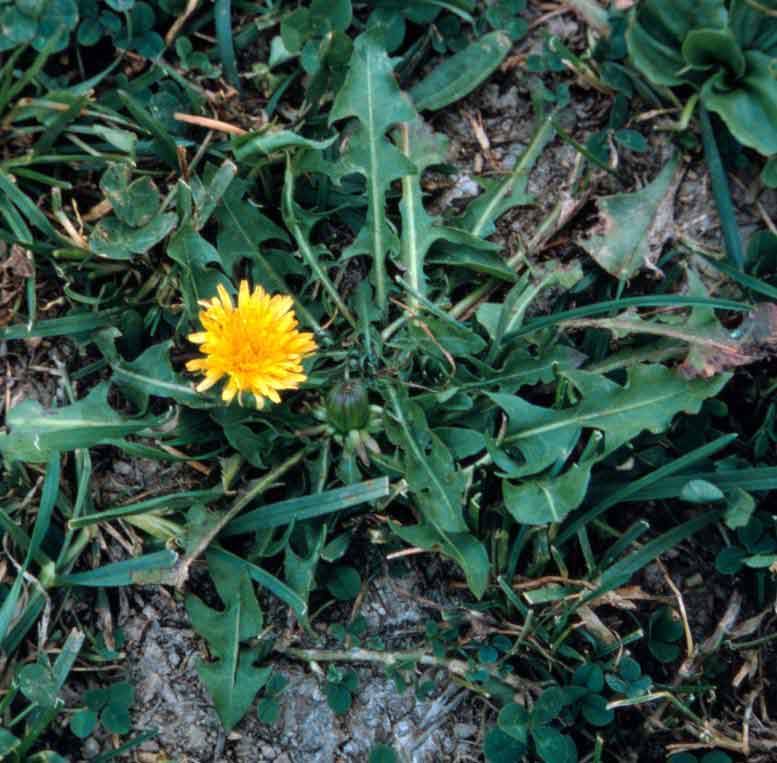
Dandelions!

Image of a dandelion, Taraxacum officinalis, from the University of Kentucky

Last week, at the "Heirloom Vegetables" workshop at the Casey County Library, Julie Maruskin said one of the most memorable and funny things I've heard in a while: that the women shopping for the now trendy high-priced dandelion greens at urban high-end produce markets are probably the same women that have ChemLawns at home! Furthermore, that these greens, billed as the more gourmet-sounding "French-Italian Dandelions" are the very same ones that come out of any American lawn! Dandelions have always been considered a highly nutritious and excellent spring green by mountain people or farmers.

However, the somewhat lowly dandelion has had a bad rap with anyone who wants the perfect lawn. Fortunately, most country people aren't too fussy about their lawnscapes and, while lawn-mowing is an enjoyable pastime or necessity for some, you do see other lawns that are more naturally wild and tolerant of the errant "good" weed. Our lawn is sort of a combo: we mow off what's there when necessary but we also have what are considered weeds peppered throughout the grass and we don't believe in spraying our lawns. [After all, the true definition of a "weed" is any plant that is in an undesirable place.]


The well-tended lawn, in the history of landscape design, is a relatively new phenomenon. Historically, farmers have grazed their livestock right near their dooryards––and some still do (even President Woodrow Wilson grazed sheep earlier in the 20th century on the White House lawn). Kitchen gardens were generally fenced in or also near the back door and often every available bit of yard was used to grow food.

My only culinary experience with dandelions to date was tasting the annual wine that my green-thumb grandfather liked to make (I believe with the blossoms), on the family farm in the northeastern end of the Appalachian mountains back in New Hampshire. It was bitter and blech. Of course, I was much younger at the time and I have not had the pleasure of trying dandelion greens while they are new and fresh. I imagine it's like having a good "high end" salad mix.

One of my favorite blogs is Blind Pig and the Acorn, written by a woman named Tipper from the mountains of North Carolina. Here she details many Appalachian customs, sayings, history, folklore, gardening (including planting by the signs), music and other traditions, as well as old-time recipes. She is a regional treasure! Here are three of her blog posts that have talked about dandelions or lawn-as-food (including one on "kilt lettuce," a culinary custom that Julie Maruskin also mentioned in her talk the other day):

• On "Garden or Lawn"
• On  Dandelion Jelly"
• On "Kill Lettuce"

[Make sure you read all of the comments after her blog posts because they are also informative!]

My daughter, from afar, just reminded me on the phone that she had to learn all of this poem in grade school, "To the Dandelion," by James Russell Lowell. Here is an excerpt from his ode:

Dear common flower, that grow'st beside the way, 
Fringing the dusty road with harmless gold, 
First pledge of blithesome May
...thou art more dear to me 
Than all the prouder summer-blooms may be.

Do you have any recipes or stories involving dandelions?

Thursday, May 19, 2011

Homemade Strawberry Jam


If you've never made it before, jam is one of the easiest things to do with strawberries, especially if you want to enjoy their beauty and flavor year-round or tuck a jar into a holiday gift basket. The trick is to make it in small batches [although next time I'm going to double this and see what happens]. The recipe also has the classic 1 cup of fruit to 1 cup of sugar ratio which is standard for jam-making.

I often turn to my well-worn copy of The Joy of Cooking [1975 edition] whenever I need an easy, tried and true recipe. This recipe for "Red Red Strawberry Jam" is practically fool-proof. Don't skimp on the amount of sugar, as tempting as it is, because you need it to set the jam. I tend to use small to medium berries so they preserve whole but you can also mash them up a bit, too, to release some of the juices (or all). If you use fresh local berries you usually don't have to hull them! At least I don't.

Red Red Strawberry Jam

• 1 quart berries (cleaned, hulled, and dried)
• 4 cups sugar
• juice of 1/2 lemon (optional, but enhances flavor)

Makes 1 quart (or 2 pints).


Step 1
Step 1 –– Put berries in a 10" heavy pot (I use enameled cast iron) and cover with sugar.

Step 2
Step 2 –– Stir gently with a wooden spoon (not sure why it has to be wooden but I'm not about to argue!) over low heat until it starts to juice up. From mixing to juicy should take a few minutes.

Step 3
Step 3 –– Once it reaches the juicy stage (after the sugar melts), set heat to moderate, stop stirring and cook until it is nice and bubbly.

Step 4
Step 4 –– When the mixture reaches a full "bubbling mass," set timer for exactly 15 minutes (17 if the berries are really ripe) and leave on moderate heat. Leave pot uncovered and do not disturb. You may run your wooden spoon back and forth across the bottom to make sure it is not sticking (another reason why a good heavy pan is helpful).

Step 5
Step 5 –– After the timer goes off, turn off the burner and set pan aside to cool.  The jam should now coat your spoon while it is still hot. Add the lemon juice, if desired. Scrape off jammy bits from side of pan and stir in gently. Cool.

Step 6
Step 6 –– When cool, stir lightly and pour mixture into sterilized jars and seal. Can according to canning instructions or store in refrigerator. Makes 1 quart (or 2 pints) of luscious strawberry jam.


Now to find some good whole wheat bread and some peanut butter!

What do you like to make with strawberries?

NOTE: The strawberries in this jam were from local grower Mose Shirk who sells his berries at the Casey County Produce Auction. They are also now available at Wilson's Cedar Point Farm (on 837 South in Pulaski County) and Hettmansperger's Greenhouse (straddling the Casey/Pulaski County line on 837 South).

Wednesday, May 11, 2011

FREE Heirloom Vegetable Workshop


Back by popular demand!  Julie Maruskin will be returning to the Casey County Library for an encore presentation on heirloom vegetables on May 17 at 10am. FAST FOOD: From Seed to Plate in 6 Weeks will highlight the basics on how to plant and raise your own heirloom vegetables––and seed sources. After her well-attended and informative visit to discuss heirloom tomatoes back in March, the library wanted to host her again. Julie is director of the Clark County Library by day and avid seedswoman in the rest of her time. She and her husband grow and collect heirloom tomatoes––as well as other vegetables––and she enjoys spreading her knowledge, and extra seeds, throughout the state.

Burkholder Seeds are available at area greenhouses.
Heirloom gardening is something that has been all the rage throughout the past decade in many gardening circles. Most people who save seeds might not even realize that they are also growing an heirloom plant and preserving a bit of American plant history. Casey County and environs is home to many heirloom varieties that have been "rescued" and propagated with several seed companies. [And did you know that many unusual heirloom seeds are available in Casey County directly through Burkholder's Seeds on Hwy 501 (and for sale in greenhouses in the South Fork Creek area)?]

Selecting heirloom seeds.
All are welcome and all that is required is that you email (here) or call the Casey County Library at 787-9381 to reserve your place. It's FREE! Participants will be able to take home a kit of 8 heirloom seed packs and other goodies.

Where? Casey County Library, Liberty, KY
When? Tuesday, May 17 at 10am

Participants at the March workshop were able to pot up a tomato seedling to take home.

Julie Maruskin, Heirloom Gardener
Julie gives an informative and engaging presentation and you will not be disappointed. Even the most seasoned gardeners will learn something at one of her workshops.

Wednesday, May 4, 2011

Local Kentucky Strawberries are RIPE!


Strawberries are delightfully early this year and you can pick your own, or buy them by the quart, at several area growers including Wilson's Cedar Point Farm, just over the line in Pulaski County (along Highway 837 south, from Mintonville in eastern Casey County or just off Route 80). Their website reports that "U-pick" are $1.70 a pound and that a gallon, picked, is $12 (or $3.50 a quart).

Joel and Beth Wilson have been growing produce at their farm since 2000. While the farm is not certifiably organic, they believe in "sustainable growing techniques and integrated pest management." You can reach them via email at wilsonscedarpointfarm@gmail.com or you can call Joel's cell phone at 606-305-8762 for crop information throughout the season (or check their website for more details).


The farm is located at 66 Garfield Tarter Road in Nancy, just off of Hwy 837, a few miles south of Route 80 at Cain's Store. Wilson's is also still offering affordable shares in their CSA (Community Supported Agriculture) when you get a basket of produce each week during the growing season. Click here for more information on this increasingly popular program: they'll even deliver to adjoining counties if you get ten or more subscribers to sign up together.

Their baskets also make nifty storage boxes.
My family is still using up some of last year's berries from Wilson's that we put up for the freezer: and they are still delicious, sweet and juicy. But there is nothing like fresh and local strawberries for your health and for flavor. Enjoy them while you can! Strawberries on cereal, strawberry shortcake, strawberry preserves, strawberry-rhubarb pie, strawberry ice cream, strawberry-spinach salad, strawberry yogurt. What's your favorite strawberry treat?

NOTE: Photos of Wilson's Farm strawberries taken in 2010 season.

Monday, April 18, 2011

2nd Annual KY Haiti Benefit Auction: Liberty, KY, April 29-30, 2011


Liberty, KY—The 2nd Annual Kentucky Haiti Benefit Auction, sponsored by the Old Order Mennonite and Amish communities from in and around Casey County, Kentucky, will be held on Friday evening April 29th starting at 4:30pm (Eastern Time) and on Saturday, April 30th from 7:00am throughout the day. The benefit auction will take place—rain or shine—at the Central Kentucky Agriculture-Exposition Center [aka Central Kentucky AG/Expo Center]. Located on Highway 127 south of Liberty in Kentucky’s southcentral scenic Knobs region, Casey County’s AG/Expo Center is within two hours of most Kentucky locations and features ample parking and a large 70,000 square foot covered, and recently walled, arena space.

On Friday evening there will be an auction preview as well as an auction of small livestock, crafts, tools and more. A full buffet supper featuring a whole hog BBQ, homemade sides and desserts is available before the auction, from 4:30-6pm on Friday—with the auction beginning at 6pm—and breakfast will be available from 7:00am on Saturday before the auction begins at 9:00am. 


Several dozen handmade Old Order Mennonite and Amish quilts and furniture items will be auctioned on Saturday, as well as a wide variety of donated items from within the community and general public to likely include all manner of tools, lawn mowers, garden tools and sheds, new tack, bicycles, furniture, housewares, quilts, cookware, crafts, and collectibles. Throughout the day there will be snacks, ice cream, homemade pretzels, produce and baked goods available for sale. A full lunch menu on Saturday includes BBQ chicken––made with a popular and secret marinade and sauce recipe––cheeseburgers, hotdogs, salad, soups, fries, pies, baked goods and more. A bake sale of delicious and quite affordable homemade baked goods from the Mennonite and Amish community—including pies, cakes, cookies, bread, rolls and other items—will be held Friday evening and again on Saturday.


The Kentucky Haiti Benefit Auction is Kentucky’s first such auction and is now an annual event held the last weekend of April (on Friday evening and all day Saturday) at Liberty’s AG/EXPO Center. The committee was encouraged by last year’s response and is hopeful that the event will continue to grow each year. $70,000 was raised at the 2010 auction for various Haiti missions including Christian Aid Ministries and 100% of all auction proceeds were donated. While the first Kentucky auction was organized soon after the devastating Haiti earthquake in 2010, the Mennonite and Amish communities have a long history of contributing aid to Haiti-based missions, according to Albert Shirk, one of the organizers. This cooperative effort of churches and individuals brings relief to the hungry, the sick and homeless of Haiti and is given to its people without regard to race, religion, color or creed. Other Mennonite-sponsored relief sales and auctions in Pennsylvania, New York, Illinois, Ohio, Florida and Indiana––which will have their 30th Haiti benefit auction in 2011––also support these missions.
Donations of saleable items and gifts-in-kind—including furniture and crafts, tools, garden items, flowers, plants, baked goods or whatever else that is either new or of good value—are most welcome and can be accepted in advance (contact Albert or Jonathan Shirk at 606-787-1748) or on the day of the sale. Monetary donations are also welcome to help support the Haiti Missions as well as the operating expenses of the Kentucky Haiti Benefit Auction—for cost of food, advertising, mailings and other––as these costs are entirely voluntary on behalf of those involved. Representatives of the various Haiti missions will also be on hand during the auction for questions.

NOTE: Cameras or television crews and photographers/reporters are quite welcome and encouraged to be at the auction. The Old Order Mennonite and Amish communities do not mind being in candid or larger crowd shots and just kindly request that they not be asked to pose for cameras.

CONTACT:
·      Albert or Jonathan Shirk: 606-787-1748 (work)
·      Matt Martin, publicity: 606-706-6319 (cell)
·      Catherine Pond, Internet/email: 606-871-9644 (home), cspond@mac.com, www.GROWCaseyCounty.blogspot.com

STOCK PHOTOS AVAILABLE UPON REQUEST: contact cspond@mac.com

Thank you in advance for your interest and support ~